Project
Filthy Fiat
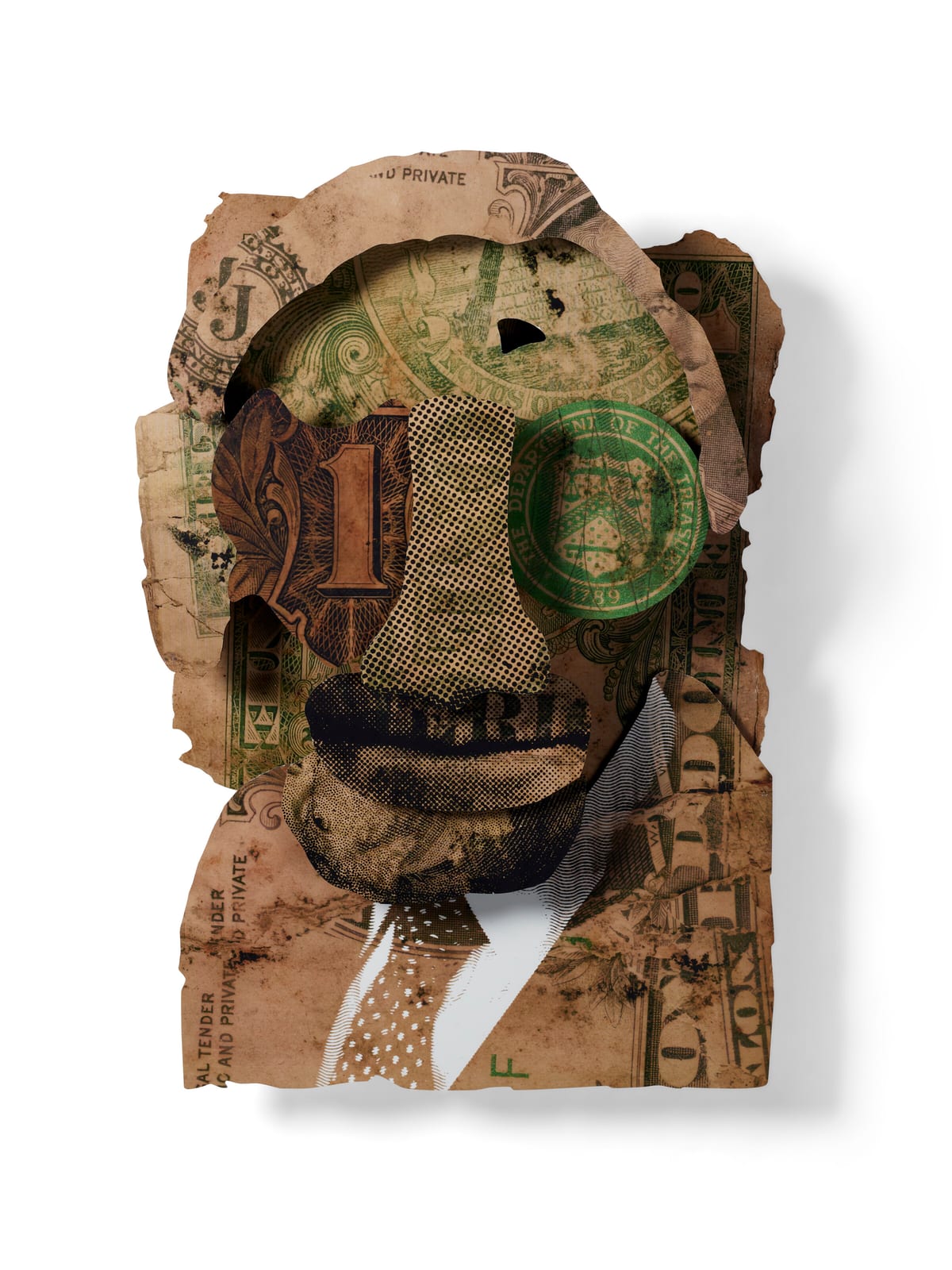
Filthy Fiat is an art project by Coldie that transforms U.S. dollar bills he buried — and that were destroyed by mold — into a commentary on the fragility of fiat currency.
The buried box
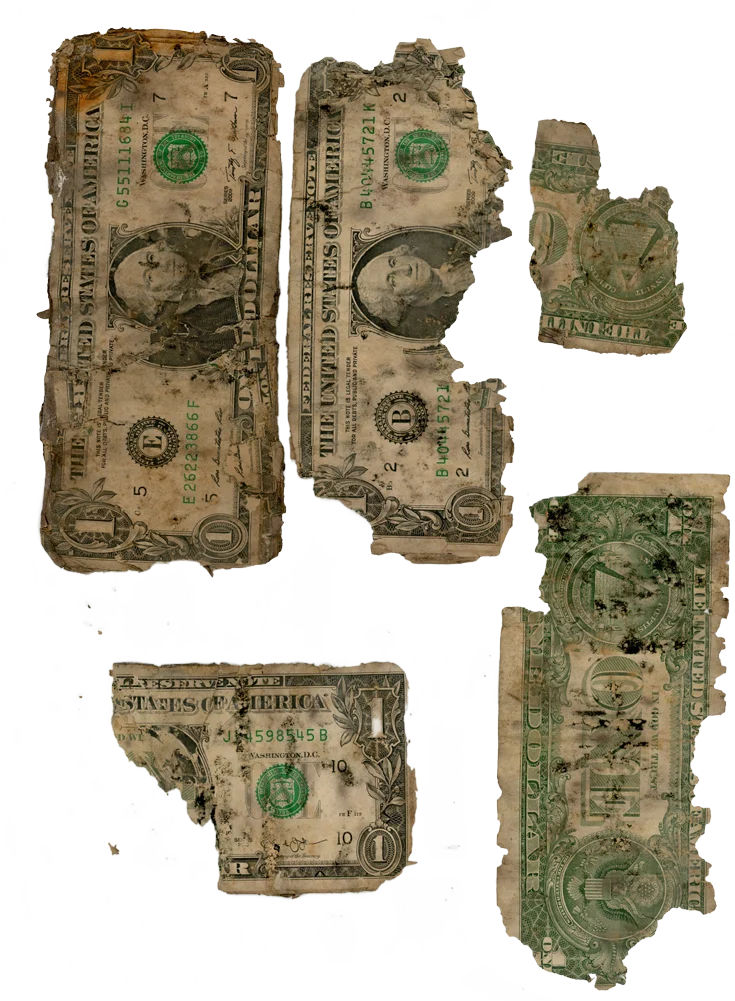
In 2020, living in a wildfire-prone mountain town, Coldie buried a box that held two hundred one-dollar bills. Two years later he exhumed it to find the cash had become a solid brick of mold — unspendable.
He turned the mold-ruined bills into Filthy Fiat: each one a unique artifact created by mold, moisture, and time, used as a visual motif for the fragility and debasement of fiat currency. Those same buried bills became the facial features of the Christie’s piece Warren Buffett — Filthy Fiat — a duality of values between durable steel and magnetism and fragile money.
The currency as medium
Filthy Fiat reframes decay as material. The dollar — the most familiar symbol of stored value — is rendered worthless by the ground itself, then made permanent as art. What money loses, the work keeps.
What the buried dollars can teach you
The project site keeps an education wing: plain answers about damaged money, the Federal Reserve and what a dollar is actually made of, illustrated only with bills from the burial.
- What happens to money buried underground? The burial measured bill by bill: mold, soil and water staining on all of them, a quarter of the paper gone.
- Is moldy money safe to handle? Why the Federal Reserve calls it contaminated, from someone who separated two hundred moldy bills by hand.
- Can you clean moldy money? No. What bleach and the washing machine actually do to a bill, and what to do instead.
- Why do banks refuse damaged or moldy money? The teller rules behind the moment a bank manager called this cash a biohazard.
- What is a fiat currency? The idea the whole project rests on: value by declaration, not by gold.
- How much has the US national debt grown? Every year from 1790 to today, charted from the Treasury's own numbers.